Total Pageviews

Thursday, 28 October 2010

Snails on the brain.

Actually the snails are completely unrelated. I don't know why I said that.

I'm even going to include bullet points in this blog. Trust me, it'll help you understand my thought processes.

So far in this blog, we have covered the following:

  • The initial idea,
  • The implementation,
  • Viewing other documentaries,
  • Historical and theoretical accounts of the Gelert legend.
Now, I want to concentrate on something very different. In our Media Practice: Fiction module, I am the editor of the fiction piece. We have decided to carry our roles over to the practical dissertation piece.

As a results of this, I have to decided to read many books on the editing process. One of these was The Technique of Film and Video Editing: history, theory and practice by Ken Dancyger. In this book, he discusses the significance of the editor in a documentary filmmaking process, stating:

"In the documentary sequence, the editor has a crucial and creative function. Given the goals of the documentary, that function gives the editor more freedom than the editing of a dramatic film. With freedom comes responsibility, however." (Dancyger, 2007: 304)

Dancyger has put this in a very simplistic way. I can as well. Oh dear.

Because of the media practice: fiction module, we will be able to implement many aspects into our film. The use of the storyboard, shot list and a shooting schedule. I'm very glad I took that module, because it has given me so much help for the dissertation and the future.

Another book which emphasises the necessity of the editor is Documentary in Practice: filmmakers and production choices by Jane Chapman. In this book, she discusses each role of documentary making and analyses how important they are. With regards to editing, she states the following:

"It is often said that a documentary is either made or at least sorted out in the edit suite, a process which can be both creative and rewarding, but also painful." (Chapman, 2006: 110)

Well, that's encouraging.

"She then goes on to discuss offline editing and how it creates an "edit decision list, to identify a matching point on the master during the online edit. During the offline a rough assembly edit come first as a loose compilation of the shots that the producer/director wants, in the order of the script, allowing for trimming later." (Chapman, 2006:110-111)

This means the working relationship between myself and Leighton (the director/presenter) will have to be solid at all times. I'm looking forward to creating the documentary, as it will (hopefully) be a testament to all of our talents.

References

  • Chapman, Jane. Documentary in Practice: filmmakers and production choices. 2006.

  • Dancyger, Ken. The Technique of Film and Video Editing: history, theory and practic. 2007.


Wednesday, 20 October 2010

This is what Leighton has been waiting for...

Leighton has been refreshing my blog page to see if I've updated it. He'll be pleased now. As I am posting this, I am lying in my bed, full of cold and with a severe headache. Here goes.

My research this week has been based around journals and documentaries. I've found a very fascinating (and long) journal from Aberystwyth University, entitled Welshing on Postcolonialism: Complicity and Resistance in the Construction of Welsh Identities (2009). The specific article I found was written by Owain Llŷr ap Gareth, who comes from Beddgelert. He discusses the name of the village and notes one important factor in the following passage:

"Does the fact that its [Beddgelert] 'founding myth' occurs after its naming have relevance to our ideas of signification? Does not the linking of this seemingly innocuous story to both colonial appropriation of literature, linked with the knowledge apparatus of Orientalism and the dawn of the popular press which transmits such fantasies to Britain, bring a different interconnection with Empire and so local and global interconnections?" (ap Gareth, 2009: 43)

This connects with the cynicism linked with this myth, as with any myth. To put it in a slightly informal manner, he begins this article by asking many questions, each of them valid. Another passage reads:

"And does the use of this story to provide a sanitised, stereotypical and kitsch view of Welsh mythology not illustrate a linking of the ideational field of Celticism and stereotype to tourism, and so the imperial economy? Is this not also a process of resignification that exposes ambiguities in translation, of wider processes, and of power relations, geography and history? This makes the 'placing' and 'naming' – the identity of 'Beddgelert' - ambivalent and 'unhomely'." (ap Gareth, 2009: 43 - 44)

Through this, he is analysing how the myth is linked to Celticism and links it to tourism, which is vital for what we're discussing. He outwardly criticises the naming of Beddgelert, in terms of association with the story of Gelert. This is a truly fascinating source, which we will hopefully be able to use for the practical piece itself.


I have also used journals to analyse tourism in Wales. Inevitably with Gwynedd, the topic of nationalism arose. No surprises there. These days, Welsh nationalism does not involve constant graffiti of "dal dy dir" or singing Dafydd Iwan's songs. It is actually far worse than that, in some aspects.


The above article is about Beca Brown, a broadcaster who basically stated that she hated the English and everything they stood for. A few people were shocked by this kind of attitude. I, myself, am completely used to it.


This article is about the controversy caused by then-Gwynedd County Councillor Seimon Glyn. He stated that people moving into Wales should be monitored and made to learn Welsh. The reason why I've included these articles is because this is an attitude that can be found all over Gwynedd. Well, with the exception of Bangor and Barmouth, probably.

This is why we've considered interviewing local people through the medium of Welsh. As I had alluded to in the previous blog, I am a fluent Welsh speaker. Thank goodness because, frankly, I would hate to be on the end of any abuse from Welsh people. That would scare me.


As I had said, I have used journals for research on tourism in Wales. A very good journal that I found was Annals of Tourism Research. In one particular volume, Susan R Pitchford analyses how tourism development in Wales has attracted the attentions of the Welsh Tourist Board and Cymdeithas yr Iaith Gymraeg. She writes the following:

"The nature of tourism development in Wales has also attracted the attention of nationalist organizations. In its report on tourism in Colwyn, North Wales (Cymdeithas yr Iaith Gymraeg nd), the Welsh Language Society opposes tourism development in rural areas on the grounds that it poses a threat to fragile Welsh-speaking communities." (Pitchford, 1995: 9)

The Cymdeithas yr Iaith Gymraeg are also quoted within the journal, discussing their views on how areas such as Colwyn Bay should be improved upon:

"Colwyn Bay should be developed as a Welsh resort by encouraging the use of Welsh on a large scale through its shops, including selling goods which use the Welsh language. Encouragement should be given to the talented local Welsh people to provide evening entertainment for the tourists, etc. There are very wide possibilities here, and advertising of these events should be aimed not only towards England, but especially perhaps, to Welsh people and to people from abroad who are looking for something different and special." (Cymdeithas yr Iaith Gymraeg nd:5).
Through this, one can analyse that tourism is a subject that should be handled very carefully within North Wales, so as not to destroy what the people hold dear to their hearts.


And finally, I can now reflect upon my audiovisual research. In short, I have watched a few documentaries on the History channel, mostly to do with how they analyse certain aspects of history. I also watched Blitz: The Bombing of Coventry (2009) to see how the documentary makers obtained the best and most emotive answers from each of their subjects. It was a truly fascinating documentary and it was great to see how the people of Coventry picked themselves up after such an atrocity.

I thought the Coventry documentary was specifically interesting, because it pinpointed one incident in history and explored how it has affected people to this very day. We are approaching our documentary in a similar manner, and hope to produce something as worthy as what I saw then.

References

  • BBC News. August 2001. BBC News. .

  • BBC Wales News. January 2001. BBC News. .

  • Blitz: The Bombing of Coventry. Dir. Ashley Gethering. 2009.

  • Cymdeithas yr Iaith Gymraeg. "Cymdeithas yr Iaith Gymraeg: nd Colwyn: Tourism." Annals of Tourism Research 1995: 5.

  • Gareth, Owain Llyr ap. "Beddgelert." Welshing on Postcolonialism: Complicity and Resistance in the Construction of Welsh Identities (2009): 43.

  • —. "Beddgelert." Welshing on Postcolonialism: Complicity and Resistance in the Construction of Welsh Identities (2009): 43 - 44.

  • Pitchford, Susan R. "Ethnic Tourism and Nationalism in Wales." Annals of Tourism Research (1995): 9.

Wednesday, 13 October 2010

The entry where Jen needed to calm me down. Tea helped.

A great amount of progress has been made this week. We have successfully narrowed down the topic of Beddgelert to the following question/proposition.

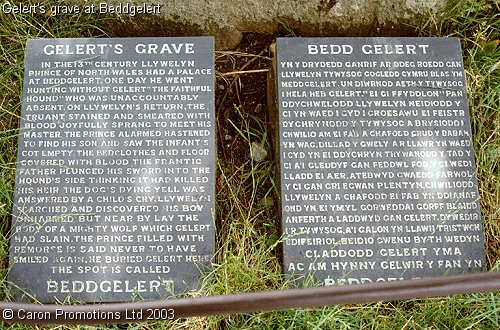
A documentary analysing how the story of Gelert has affected tourism in the village of Beddgelert.

This will be with a view to analyse other factors of tourism in the village, such as the surrounding area (Caernarfon and Porthmadog), access to Mynydd yr Wyddfa (Snowdon) and it's association with poetry. In truth, it's association with poetry comes from Nantmor, but they are incredibly close.

The inclusion of these factors will allow us to explore more about the village itself, as opposed to being a regurgitation of the story of Gelert. As interested as I am in the story, I know that there is far more to Beddgelert than that.

What will hopefully be useful is the fact that I can speak Welsh. We are hoping to include interviews with local people and there is no doubt in my mind that speaking Welsh is a necessity for that. Leighton isn't a fully fluent Welsh speaker, but that might be where I prove to be useful.

In terms of my reading, I've come across books that are so old that Caernarfon was Carnarvon. I'm not a fan of this. At all. And Porthmadog is Portmadoc in this book. I don't like that either. I much prefer Welsh place names to be, you know, Welsh.

Before I dissolve into a rant about Welsh place names, I should probably discuss the books I'm referring to. In Beddgelert and its neighbourhood (1840), James Hews Bransby aims to provide an illustration of Beddgelert without the use of a drawing, instead opting for colourful descriptions of the surrounding area and it's history. An example of this is as follows:
"Beddgelert, a village consisting, for the most part, of a few cottages, a neat church and a picturesque old bridge, is situated in the bosom of a romantic valley, about thirteen miles to the south-east of Carnarvon." (Bransby, p3)
I love how he describes Beddgelert and how he juxtaposes how little there is with where it is. I haven't used the word juxtaposition since secondary school. Now I know that the group project is helping me.

Another book I came across was Bedd Gelert: Its Facts, Fairies and Folk-lore by D.E. Jenkins. Written in 1899, he analyses the history of Beddgelert, including the story of Gelert. He writes the following:

"The legend of Llywelyn and his dog Gelert is the most popular legend connected with Wales. This is perhaps the only Welsh legend universally known, and the credit of spreading it so widely must be divided - no matter in what proportion - between the talent and sympathy of the Hon. W. R. Spencer and the generosity of Nature." (Jenkins, p56)

To hear that the legend of Gelert, from a village in my own backyard, ignites an element of pride in me that I had not previously recognised.

References

  • Bransby, James Hews. Beddgelert and its neighbourhood. 1840.

  • Jenkins, D.E. "The Legend of Gelert." Jenkins, D.E. Bedd Gelert: Its Facts, Fairies and Folk-lore. 1899.

  • Jones, John. Llên Gwerin Sir Gaernarfon. Caernarfon, 1908.

  • Senior, Michael. Faithful Hound. Llanrwst, 2009.

  • http://www.youtube.com/watch?v=NJK7F548ctc (Peter Flynn's video about Beddgelert and it's history)

  • http://www.youtube.com/watch?v=pSkEBkEI9Bo (A video showing Beddgelert's ancient railway tunnel.)


Friday, 8 October 2010

"It's like suffocating under a pile of poo."

An explanation for the title is probably required.

One of my creative flatmates took it upon herself to describe the effect that reality television has had on television in the last ten years.

I am currently constructing some backup ideas, should this idea fall through or, worse still, we end up doing single projects on our own. I absolutely adore television history, and I do think I could come up with a topic for a single dissertation, if it were necessary.

I've also looked at about six books, with regards to documentary theory. Having studied documentary quite thoroughly last year, I knew which books were the best ones for me to look at. Bill Nichols deals with documentary theory up until the 1990s, specifically looking at various modes of documentary. Through looking at each mode, I could quickly deduce that our documentary would probably fit into the participatory mode, as Leighton has put himself forward to be our presenter. Our only difficulty with this is that the film could potentially become a channel for the filmmaker's agenda.

In order to research this type of documentary in a more thorough style, I decided to watch the documentaries of Michael Moore. Suffice to say, I am not a fan of his, but for the purposes of this project, I will endure the suffering.

In the simplest possible terms, Michael Moore likes to be visually involved with his documentaries. Fahrenheit 911 and Roger and Me are prime examples of these. Moore (an excellent name, by the way) never claims to be impartial in his documentaries either, as each one has a political or social theme that Moore is pursuing.

I have more faith in Leighton than I would have in Michael Moore. We want to convey the story of Gelert in an impartial way and, in one way or another, we'd like to analyse how much truth there is in the story, without being too obtrusive.

References

Biltereyst, Daniel. "Reality TV, troublesome pictures and panics: reappraising the public controversy around Reality TV in Europe." Jermyn, Deborah and Su Holmes. Understanding Reality Television. 2004. 91.

Bruzzi, Stella. "New British Observational Documentary: docusoaps." Bruzzi, Stella. New Documentary: A Critical Introduction. 2000. 75-76.

Bruzzi, Stella. "New British Observational Documentary: docusoaps." Bruzzi, Stella. New Documentary: A Critical Introduction. 2000. 76.

Bruzzi, Stella. "The performative documentary: Barker, Dineen and Broomfield." Bruzzi, Stella. New Documentary: A Critical Introduction. 2000. 177-178.

Ellis, Jack C and Betsy A McLane. "English-language documentary in the 1990s and beyond." Ellis, Jack C and Betsy A McLane. A new history of documentary film. 2005. 316.

Ellis, Jack C and Betsy A McLane. "English-language documentary in the 1990s and beyond." Ellis, Jack C and Betsy A McLane. A new history of documentary. 2005. 315.

Ellis, Jack C and Betsy A McLane. "Some other ways to think about documentary." Ellis, Jack C and Betsy A McLane. A new history of documentary film. 2005. 328.

Ellis, Jack C. "Postmortem: Assessments 1972 - 2000." Ellis, Jack C. John Grierson: Life, contributions, influence. 2000. 333.

Lopez, Ana M. "The Postmodern Documentary." Renov, Michael. Theorising Documentary. 1993. 153.

Rosenthal, Alan. "Royal Family: Richard Cawston." Rosenthal, Alan. The New Documentary In Action: A Casebook In Filmmaking. 172. 199-200.

Roger and Me. Dir. Michael Moore. 1989.

Fahrenheit 911. Dir. Michael Moore. 2004.

Friday, 1 October 2010

"I've seen you on film, it's not a good idea."

Said title was Simon's advice to Dan. Dan is in my group, and therefore he will not be a physical appearance in our group project.

I enjoy practical projects. They give me an insight into what I can actually create and allow me to see my work in the televisual form that I want to work in. At this point, several ideas have entered my otherwise shallow brain, but none of them seem to jump out at me.

I've lived in Wales for almost fifteen years and I am a Welsh speaker. So my initial hope was to produce a documentary about the how the numbers of Welsh speakers could be improved in any area of Wales. Needless to say, this idea was greeted with a certain lack of enthusiasm that I wish to never see again.

I've even contemplated a historical documentary. I like history, I know my history. I know quite a few people who would quite happily Elizabeth I or Henry VIII. I even know someone who has the costumes for these. Yes, I've really thought this through.

Strangely enough, as I was typing about the historical documentary, Leighton sent me a text message suggesting a reenacted documentary about the story of Beddgelert. This is the best idea we've had so far. I know a lot about Welsh history and I've visited Beddgelert more times than I care to remember.

I like to be thorough with my preparation, so I have already done some reading to ensure that my interpretation of the story is as accurate as it could be. Welsh Folk Tales (1989) by Robin Gwyndaf has been on my bookshelf for about nine years, but now it can have some academic relevance at last.

I also decided to read a chapter from Alan Rosenthal's Writing, directing and producing documentary films and videos (2007). In this book, he dedicates a chapter to the history documentary and mentions how history documentary has "become one of the basic themes for documentary-making, especially television documentary." (Rosenthal, 2007: 311)

Beddgelert is a beautiful, scenic area with a well-publicised history. To create a documentary about this would make me very proud to have lived here.

References

· Gwyndaf, Robin. Welsh Folk Tales. 1989.

· Rosenthal, Alan. "The History Documentary." Writing, directing and producing documentary films and videos. 2007. 311.